
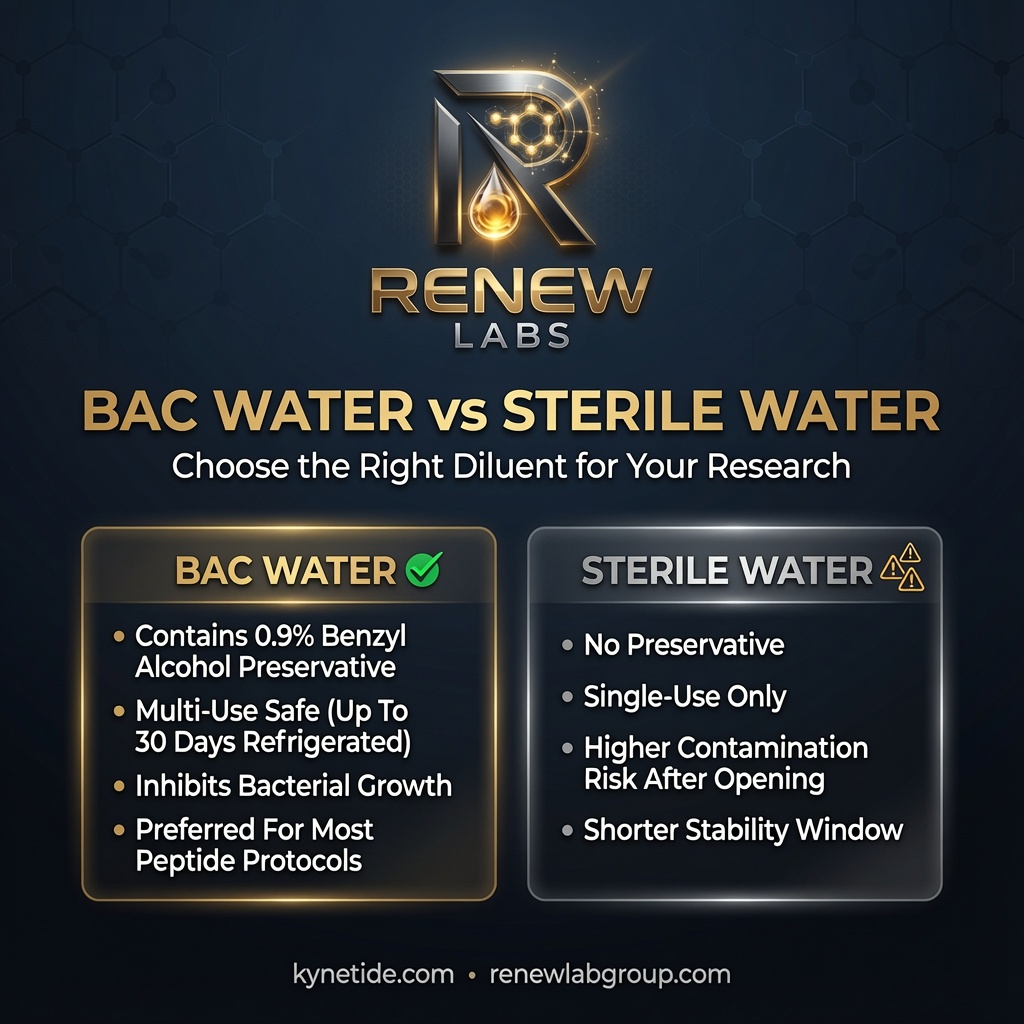
BAC Water vs Sterile Water: Choosing the Right Diluent
Two clear liquids. One protects research vials for weeks; one does not. Choosing the right diluent for research: Bacteriostatic Water […]
In-depth guides for researchers using bacteriostatic water and related laboratory supplies.
Two clear liquids. One protects research vials for weeks; one does not. Choosing the right diluent for research: Bacteriostatic Water […]
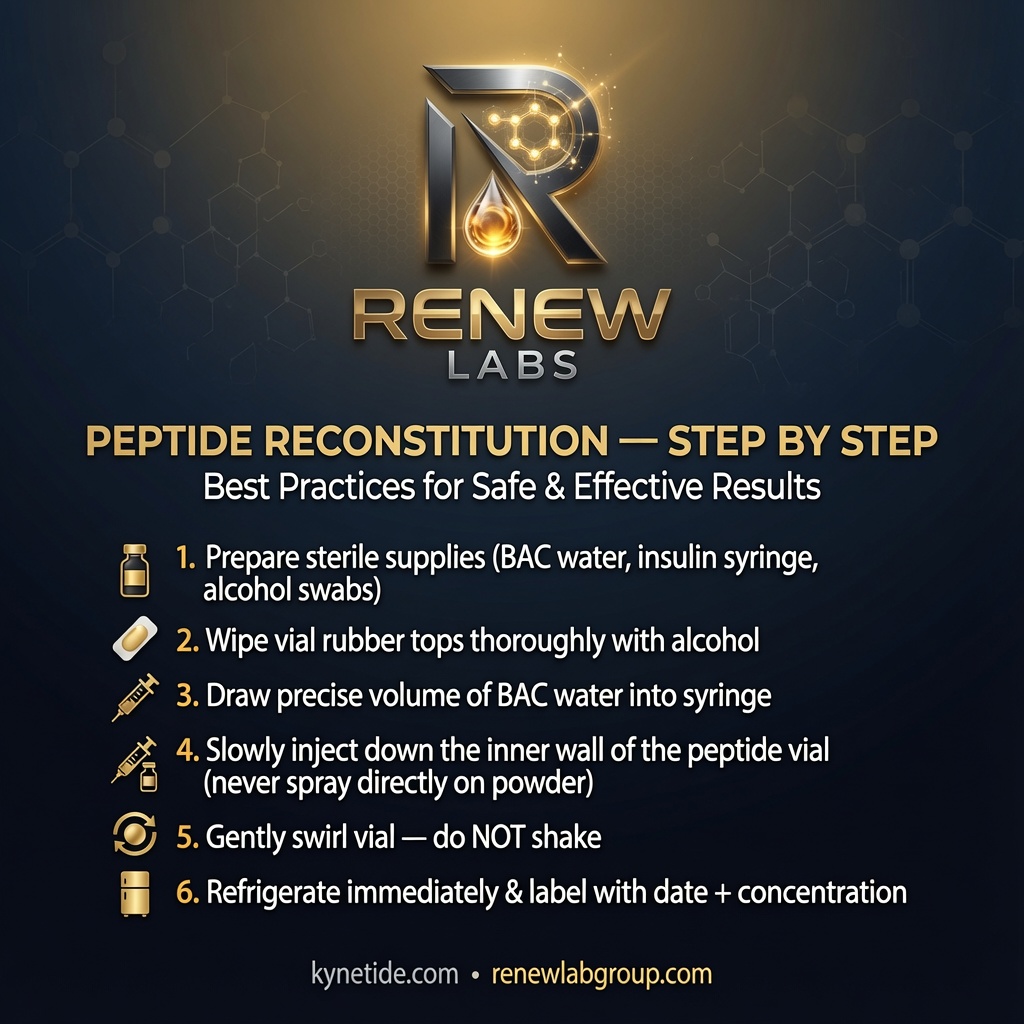
Reconstitution is not difficult, but every step helps protect the compound’s integrity. General laboratory best practices for safe, effective research
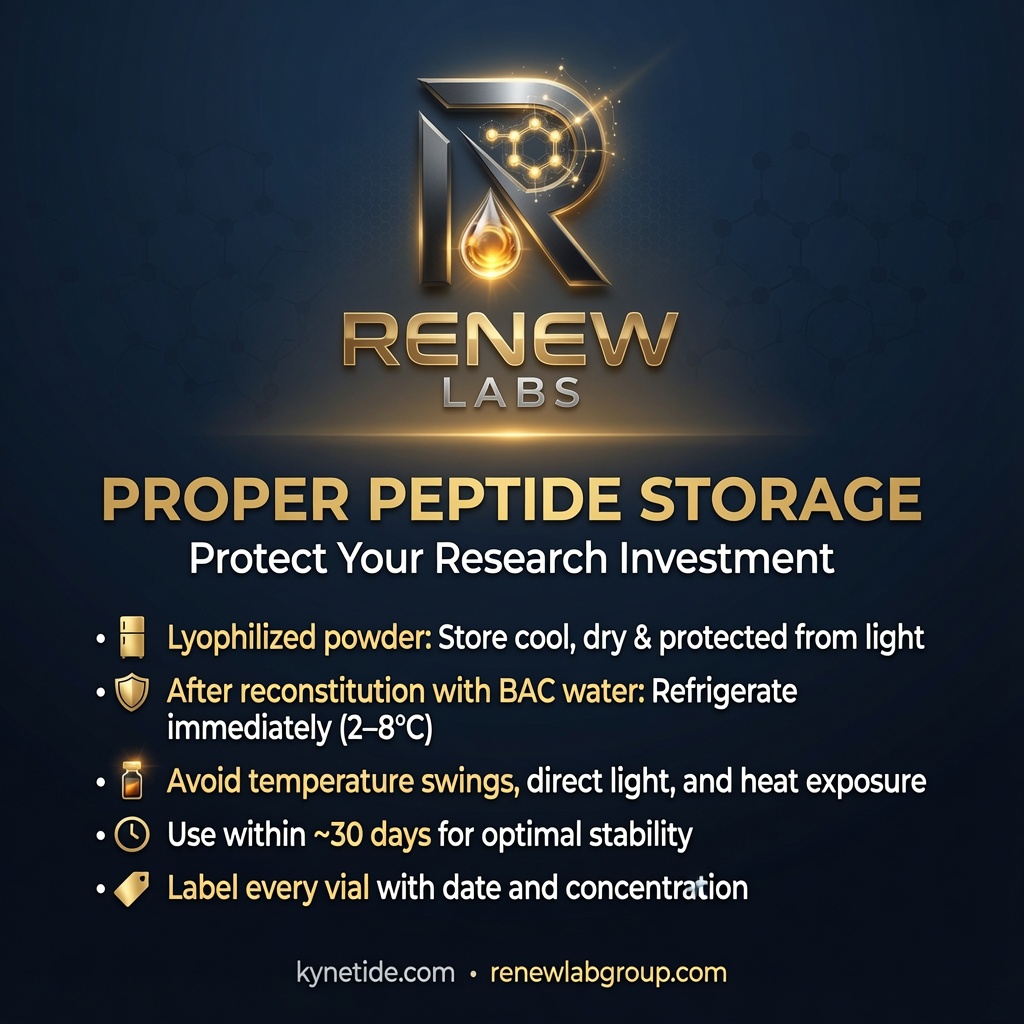
Verified purity is only half the equation. Poor storage can undo it. Protect your research investment with correct storage: Storage
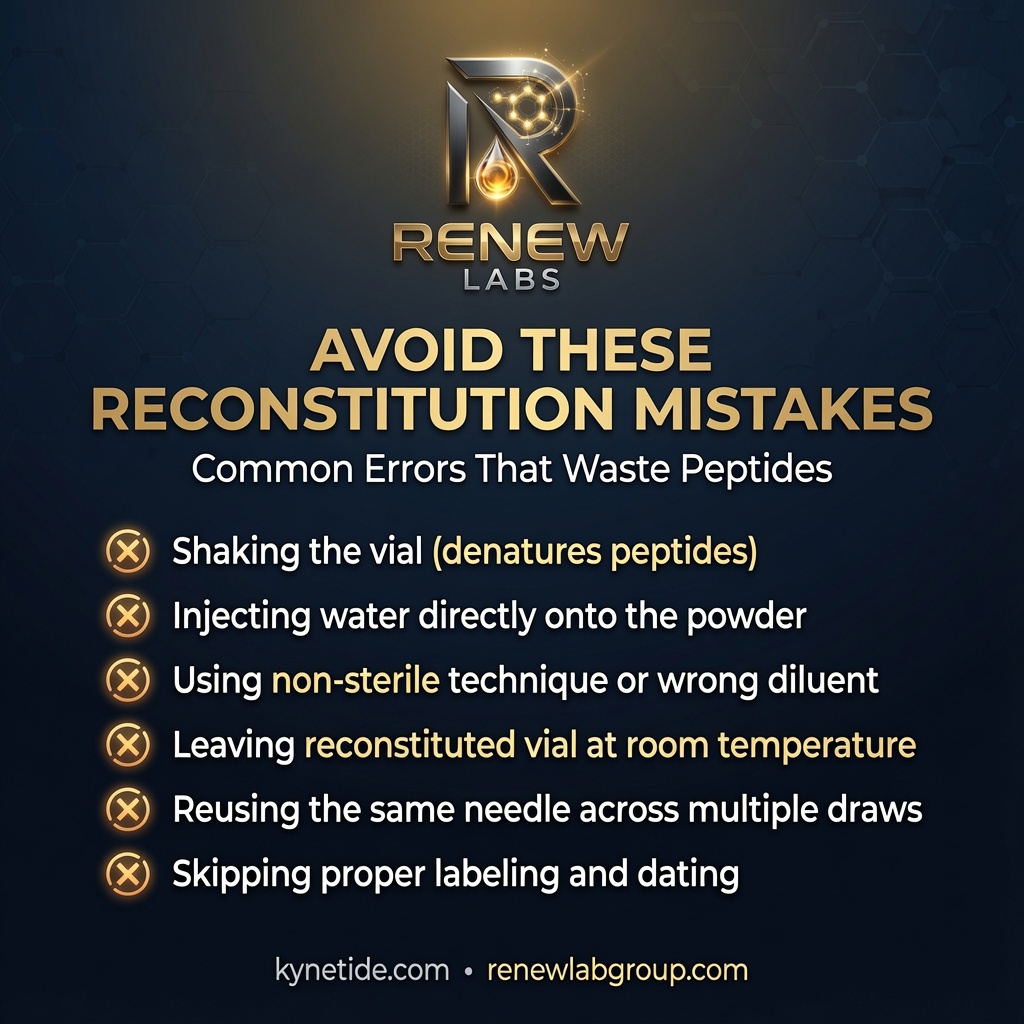
The fastest way to waste a research vial? These six mistakes. Common errors that can ruin reconstituted research compounds: Protect
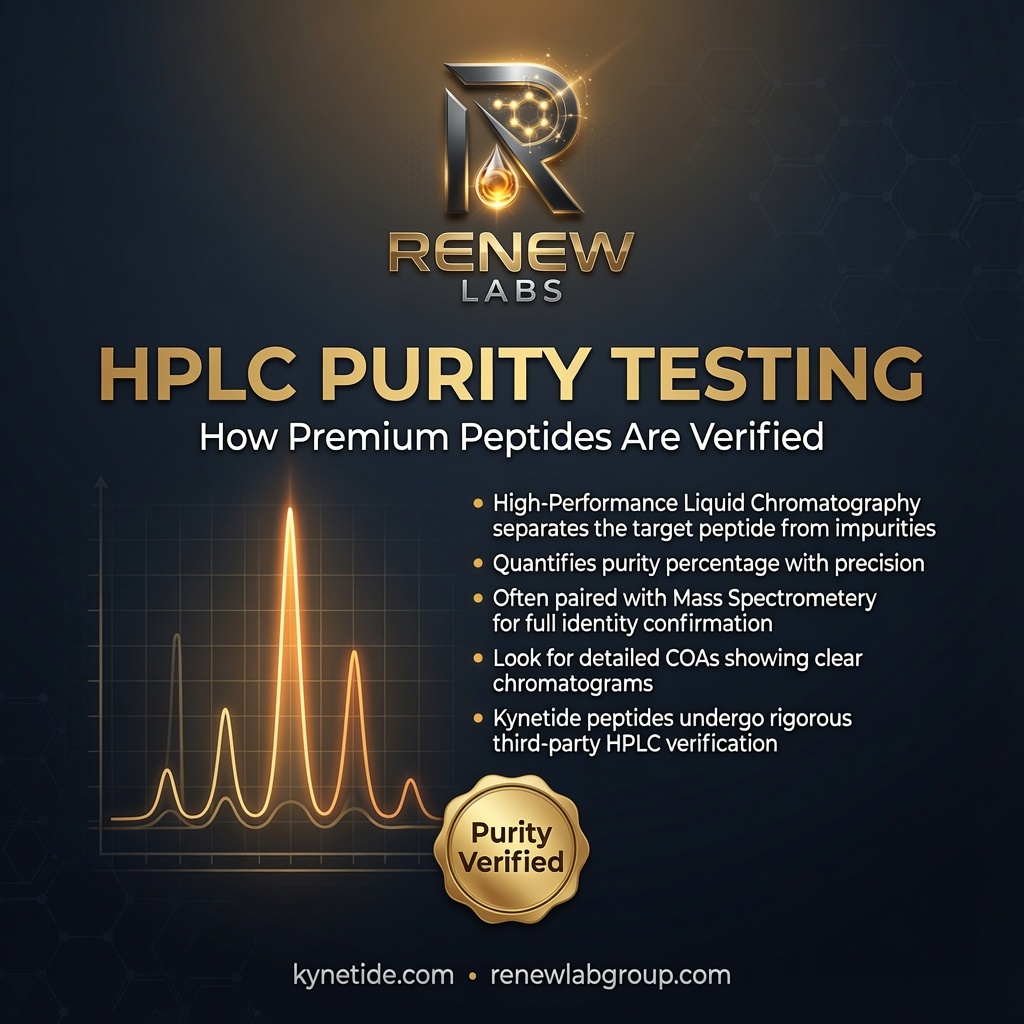
This peak is the difference between verified and “trust me.” How premium research compounds are verified: A clean chromatogram is
Understanding concentration is foundational to reproducible research. Using a 5 mg vial purely as a mathematical example: Consistent, accurately documented
A label can say 99% pure. HPLC is what proves it. Trust the data behind every batch: Without a chromatogram,
One ingredient turns single-use water into a multi-week research workhorse. Here is the chemistry behind it. What makes bacteriostatic water
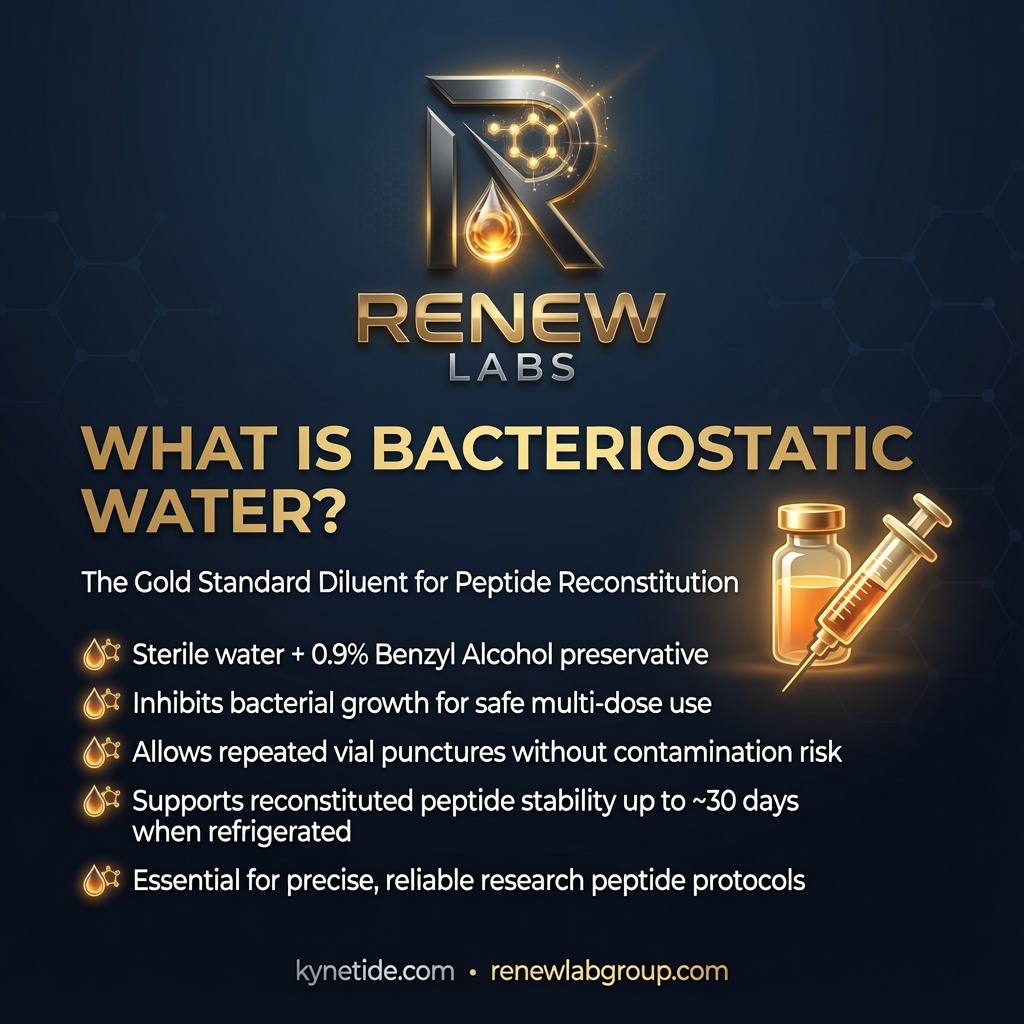
The most important vial in a research fridge often isn’t the peptide itself — it’s what it gets mixed with.
Quick Answer: Bacteriostatic water (BAC water) should be disposed of by diluting with water and flushing down a drain in