
10 Red Flags When Buying Bacteriostatic Water — Supplier Quality Guide
Quick Answer The top red flags when buying bacteriostatic water include: no batch-specific COA, missing endotoxin data, unknown manufacturing location,
Quick Answer The top red flags when buying bacteriostatic water include: no batch-specific COA, missing endotoxin data, unknown manufacturing location,

Quick Answer Peptide stability in bacteriostatic water depends on four factors: pH (target 4.5-7.0), temperature (2-8 degrees C refrigerated), light
Quick Answer: BPC-157 (Body Protection Compound-157) is a synthetic 15-amino acid peptide derived from a gastric juice protein. In research
Quick Answer: Renew Lab Group ships bacteriostatic water in insulated packaging designed to maintain product integrity throughout transit. While BAC
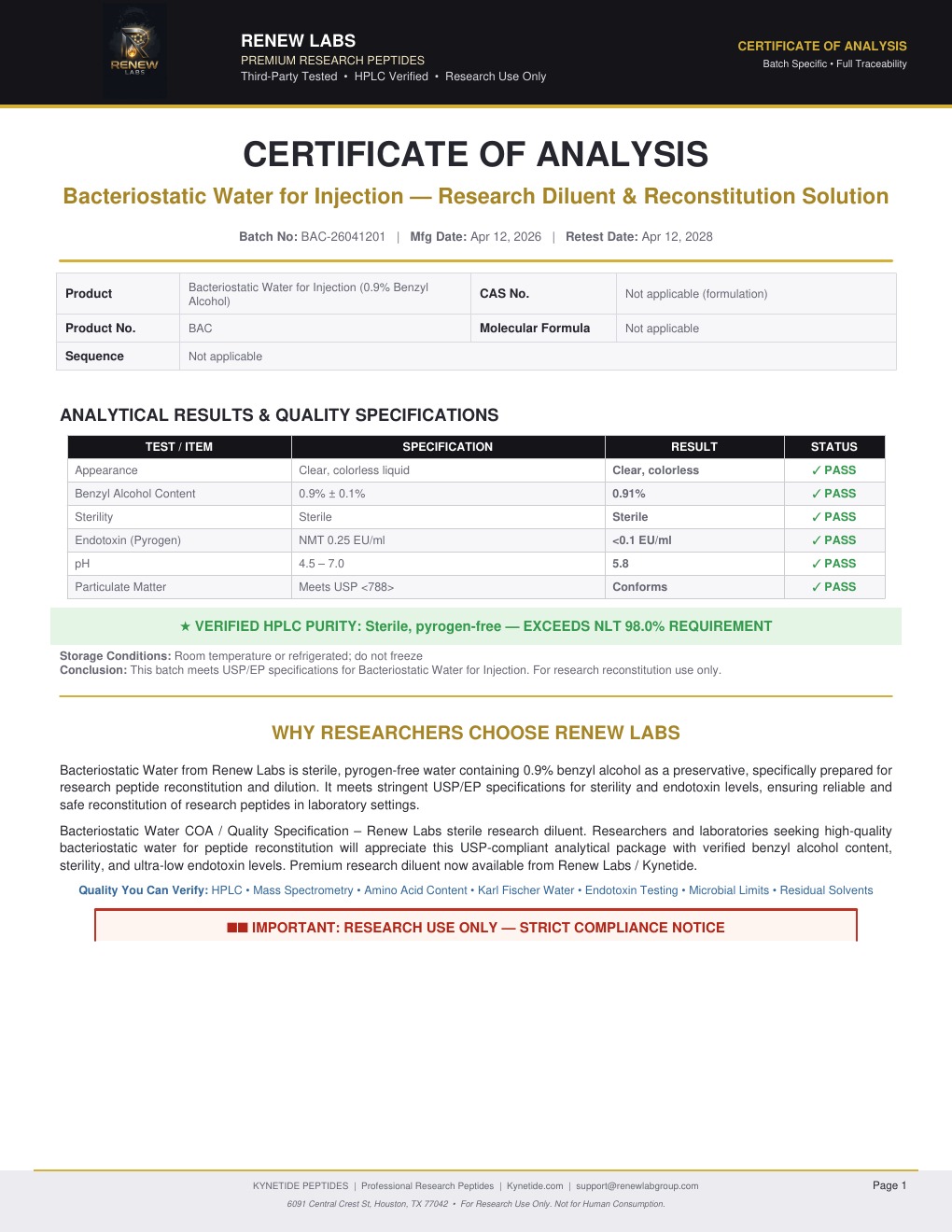
Quick Answer: Unopened bacteriostatic water should be stored at room temperature (15–30°C), away from direct light. Once opened, use within
Quick Answer: Most research peptides reconstituted in bacteriostatic water at 2–8°C remain stable for 4–8 weeks, depending on the specific
Quick Answer: GLP-1 receptor agonists including semaglutide and tirzepatide are among the most actively studied peptides in metabolic research. In
Quick Answer: NAD+ (nicotinamide adenine dinucleotide) is a coenzyme present in all living cells that is central to energy metabolism,

Quick Answer: USP 797 is the United States Pharmacopeia chapter governing sterile compounding in pharmacies. It establishes standards for facility
Quick Answer: Endotoxins are lipopolysaccharides (LPS) from gram-negative bacterial cell walls that can cause inflammatory responses even in the absence