Endotoxin Testing in BAC Water — Why 0.1 EU/mL Matters for Research | Renew Lab Group
Quick Answer: Endotoxins are lipopolysaccharides (LPS) from gram-negative bacterial cell walls that can cause inflammatory responses even in the absence […]

Quick Answer: Endotoxins are lipopolysaccharides (LPS) from gram-negative bacterial cell walls that can cause inflammatory responses even in the absence […]
Quick Answer: Benzyl alcohol (C7H8O) is the bacteriostatic preservative in bacteriostatic water, present at a concentration of 0.9% (±0.1%). It
Quick Answer: Compounding pharmacies across the country prefer Texas-manufactured bacteriostatic water for five key reasons: (1) faster shipping from a

Quick Answer: Bacteriostatic water (BAC water) contains 0.9% benzyl alcohol as a preservative, allowing multi-draw use from a single vial
Quick Answer: Advanced peptide research protocols focus on maximizing stability, reproducibility, and data integrity. Key advanced practices include: single-use aliquoting
Quick Answer: This mega-guide covers reconstitution protocols, BAC water volumes, storage requirements, and research dosing references for 8 major peptide
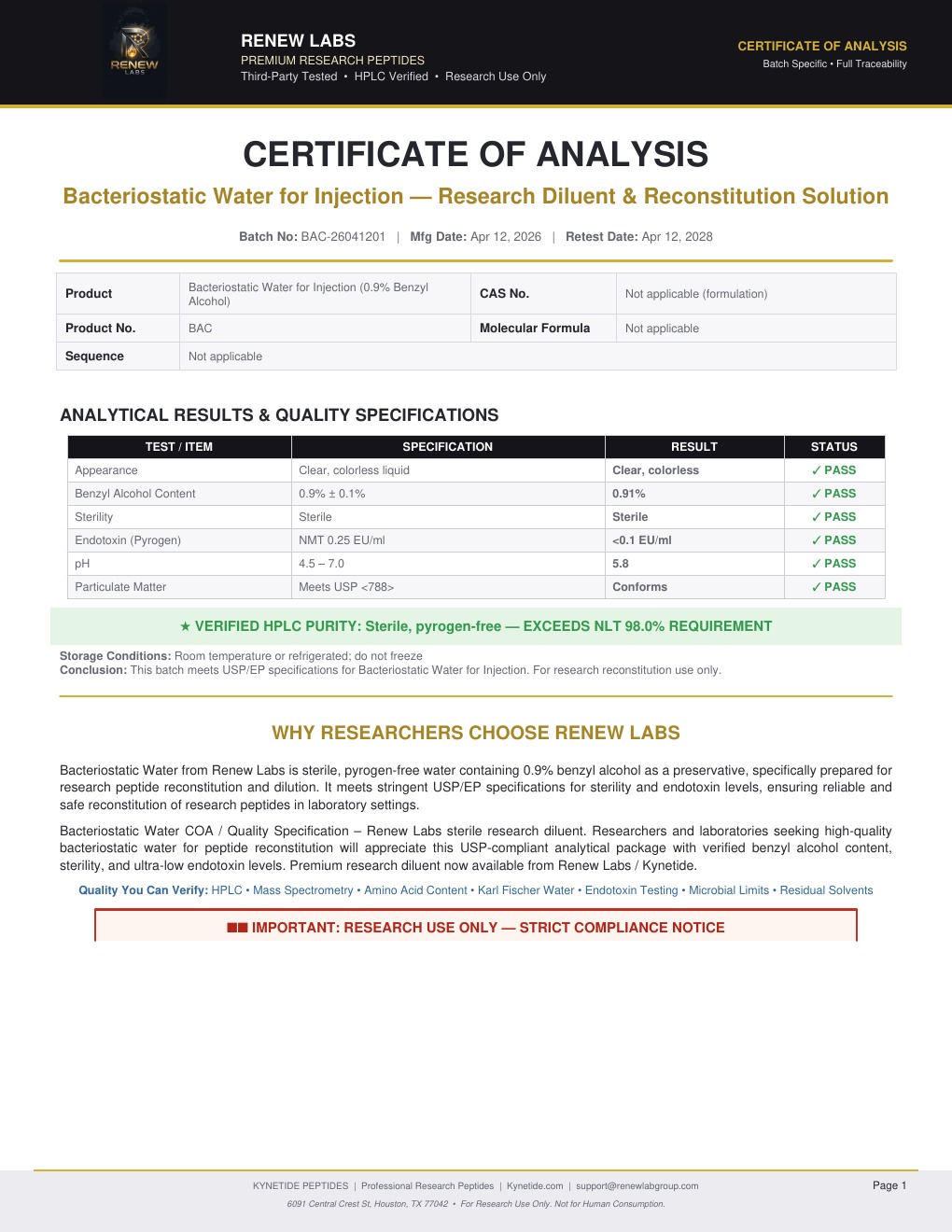
Quick Answer: Compounding pharmacies operating under USP 797, 503A, and 503B standards require stringent documentation of all raw materials and
Research Roundup: 2026 continues to see explosive growth in GLP-1 receptor agonist research, expanding BPC-157 mechanistic studies, surging NAD+ research
Quick Answer: This HPLC glossary defines the key terms you will encounter when reading chromatography data, Certificates of Analysis, and
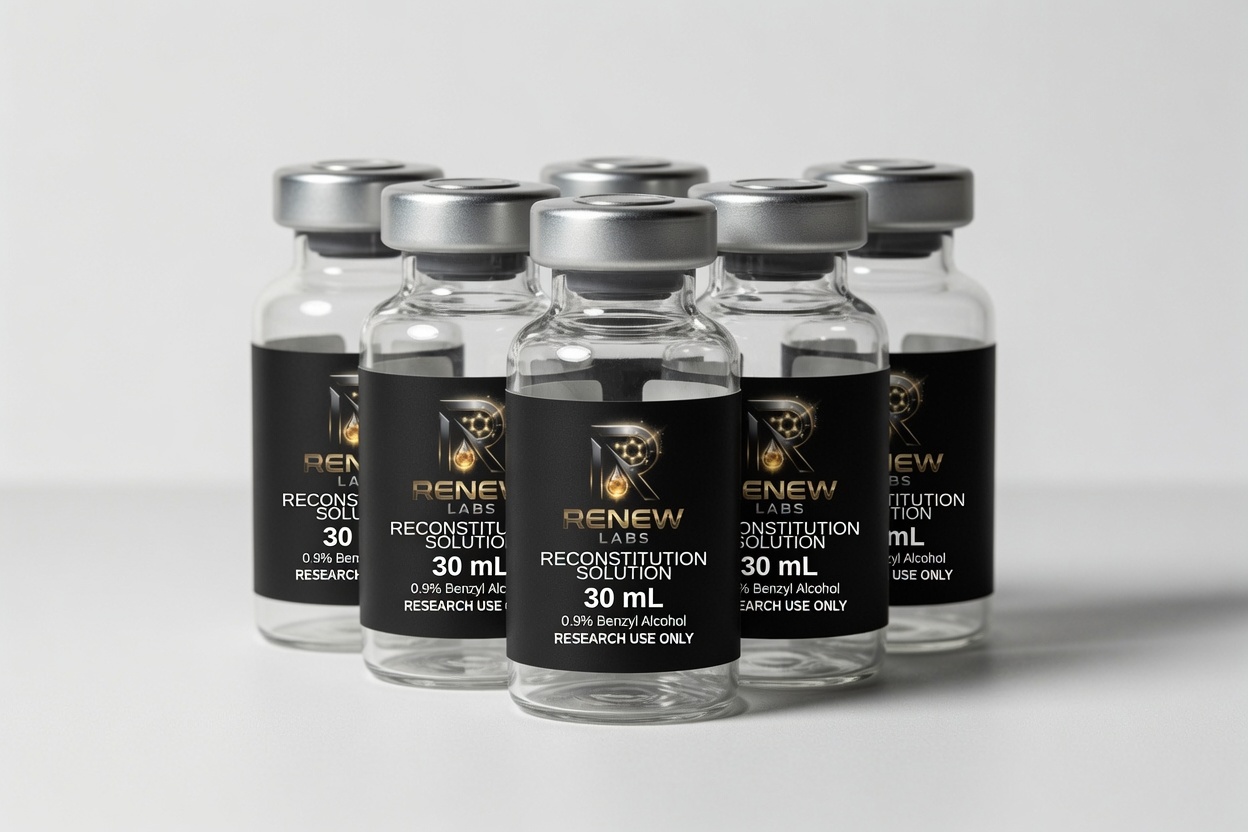
Quick Answer: For GLP-1 peptide reconstitution research, bacteriostatic water (0.9% benzyl alcohol) is the preferred solvent for multi-dose protocols with